Houseboats in Amsterdam – History, Daily Life, and Etiquette from the Water
Learn how Amsterdam's houseboats evolved, what life is like on board, and how to respect residents while passing by on a canal cruise.
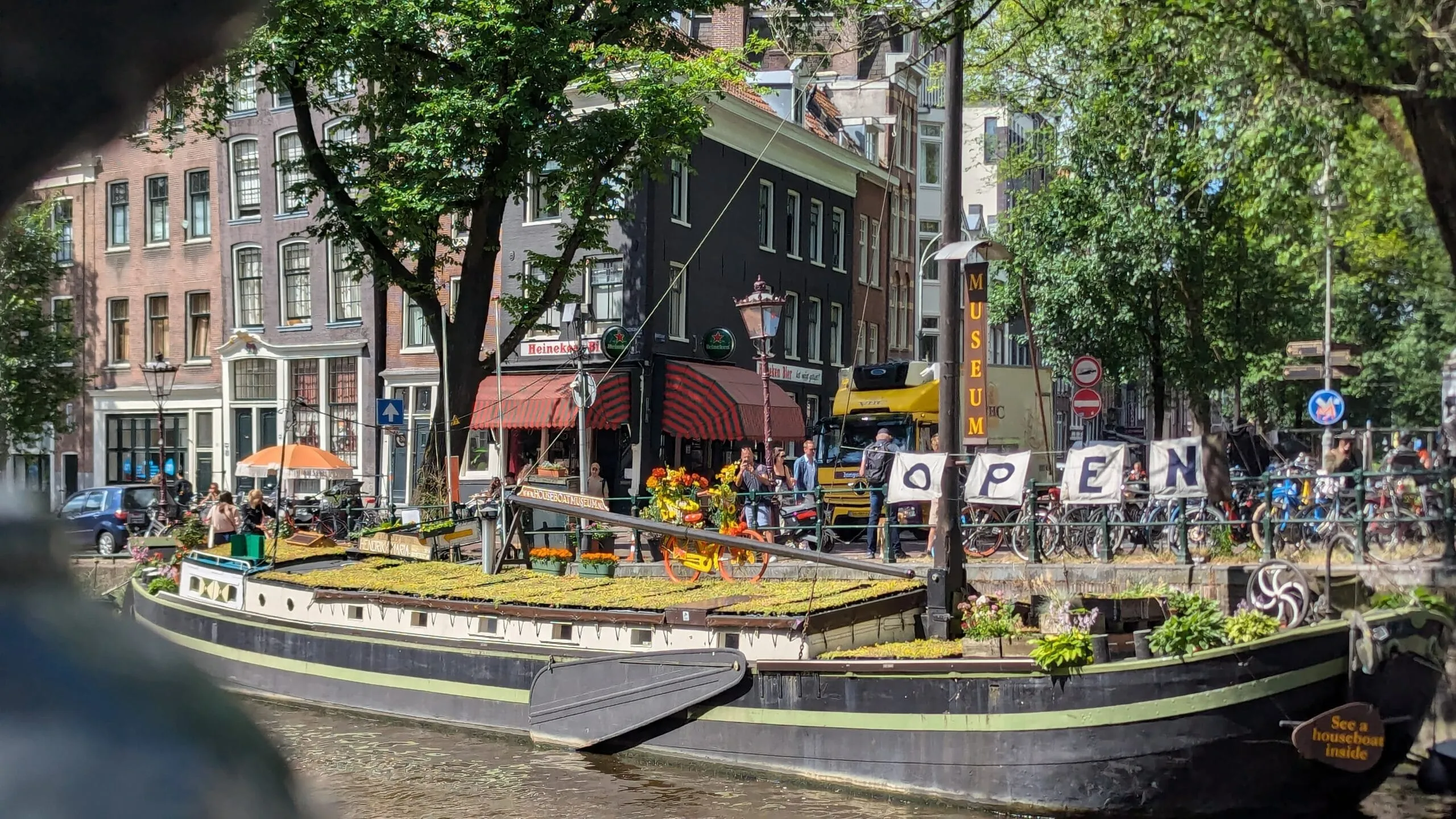
One of the first things you’ll notice from your canal cruise is rows of houseboats: quirky, lived-in, and very photogenic.
How houseboats became a thing
After World War II:
- There was a housing shortage in Amsterdam.
- Retired cargo ships and barges were converted into cheap housing.
- Over time, purpose-built floating homes joined the mix.
Today, many moorings are so desirable that they pass down like family heirlooms.
Types of houseboats you’ll see
- Converted barges – Long, low hulls with distinctive prows.
- Floating houses – More like bungalows on pontoons, often with modern design.
- Hybrid structures – Old hulls with added boxy superstructures.
Look for:
- Flower pots, small gardens, and even tiny terraces on roofs.
- Cats lounging on gangways – they have a reputation as canal guardians.
Daily life on a houseboat
- Utilities (water, power, internet) connect to shore like normal homes.
- Many have sewage connections to the city system – a modern requirement.
- Movement is minimal; boats are securely moored and feel surprisingly stable.
Some residents say they feel more in tune with seasons and weather because water levels, light, and reflections change daily.
Etiquette when you pass by
- Avoid zooming in on people through windows as if it's a zoo.
- Keep noise reasonable, especially on narrow residential canals.
- A friendly wave is welcome; shouting is not.
Visiting a houseboat museum
If you’re curious what it looks like inside, the Houseboat Museum on the Prinsengracht lets you:
- Walk through a classic barge-turned-home.
- See how rooms are arranged in a long, narrow space.
- Understand how regulations and expectations evolved.
Bottom line
Houseboats are a key part of Amsterdam’s waterfront character.
See them not just as objects in your photos but as people’s homes, anchored between history and everyday life.
About the Author

Canal Life Reporter
I wrote this guide to make canal cruising easy, insightful, and uncluttered — the way Amsterdam is best experienced.
Tags
Comments (0)
Loading comments...